
Already one of the most celebrated parks departments in the country, San Francisco Recreation and Parks saw an opportunity hiding in plain sight. They had 139 tennis courts and 72 pickleball courts spread across 64 park locations, yet all instructional programming ran through a single facility at Golden Gate Park. The city could only offer so much with its own staff, and demand for pickleball and tennis instruction had long outpaced what they could realistically deliver.
Residents were getting turned away and courts sat empty. Independent instructors who wanted to teach had no real path to do so, and residents who wanted lessons had no easy way to find them.
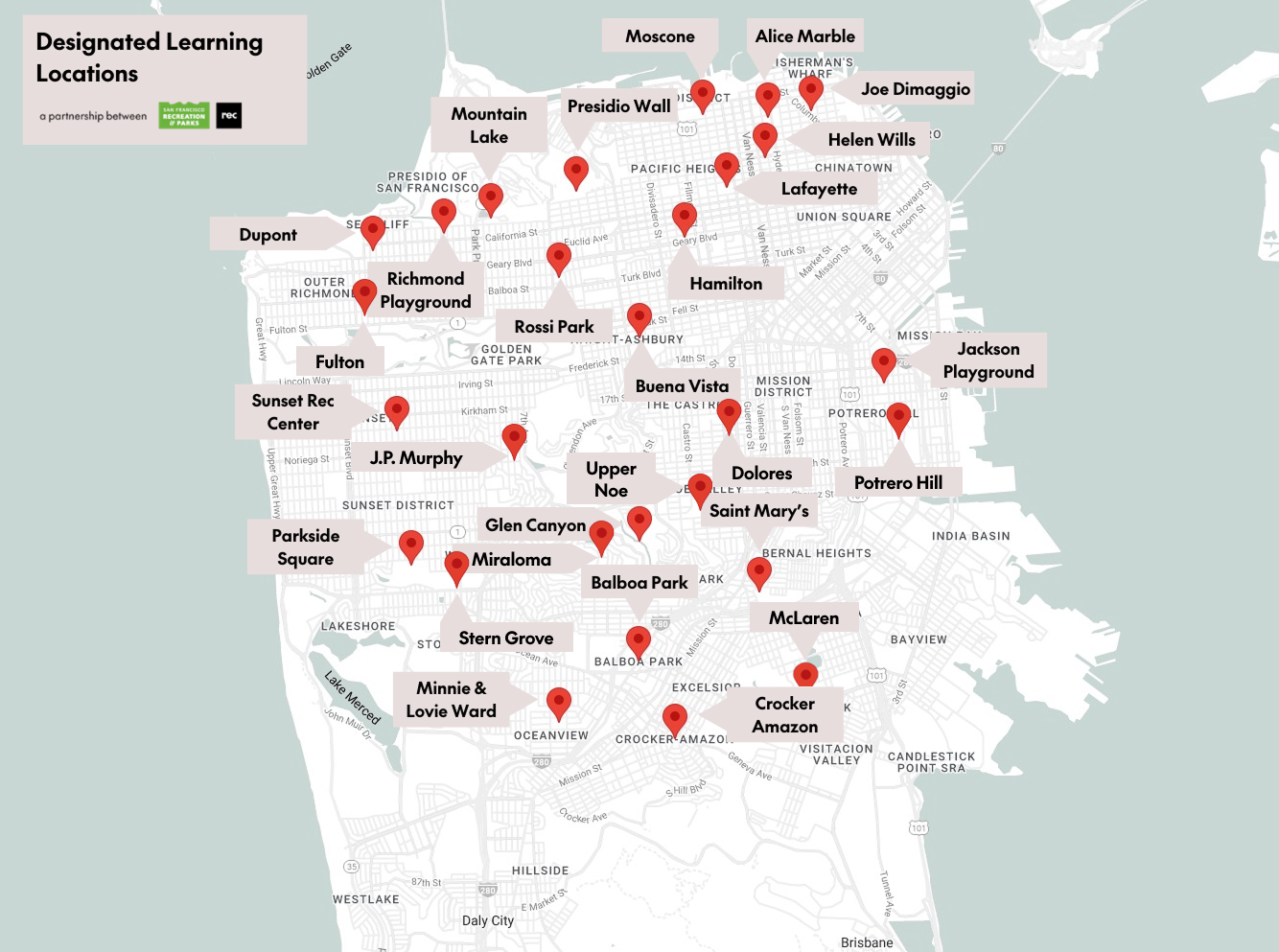
Partnering with Rec changed all of that. Today, independent instructors are teaching lessons across 28 court locations citywide, thousands of residents have accessed programming that simply didn’t exist before, and the city has a brand new revenue stream to show for it.
.png)
The Solution: Rec Instructor Network
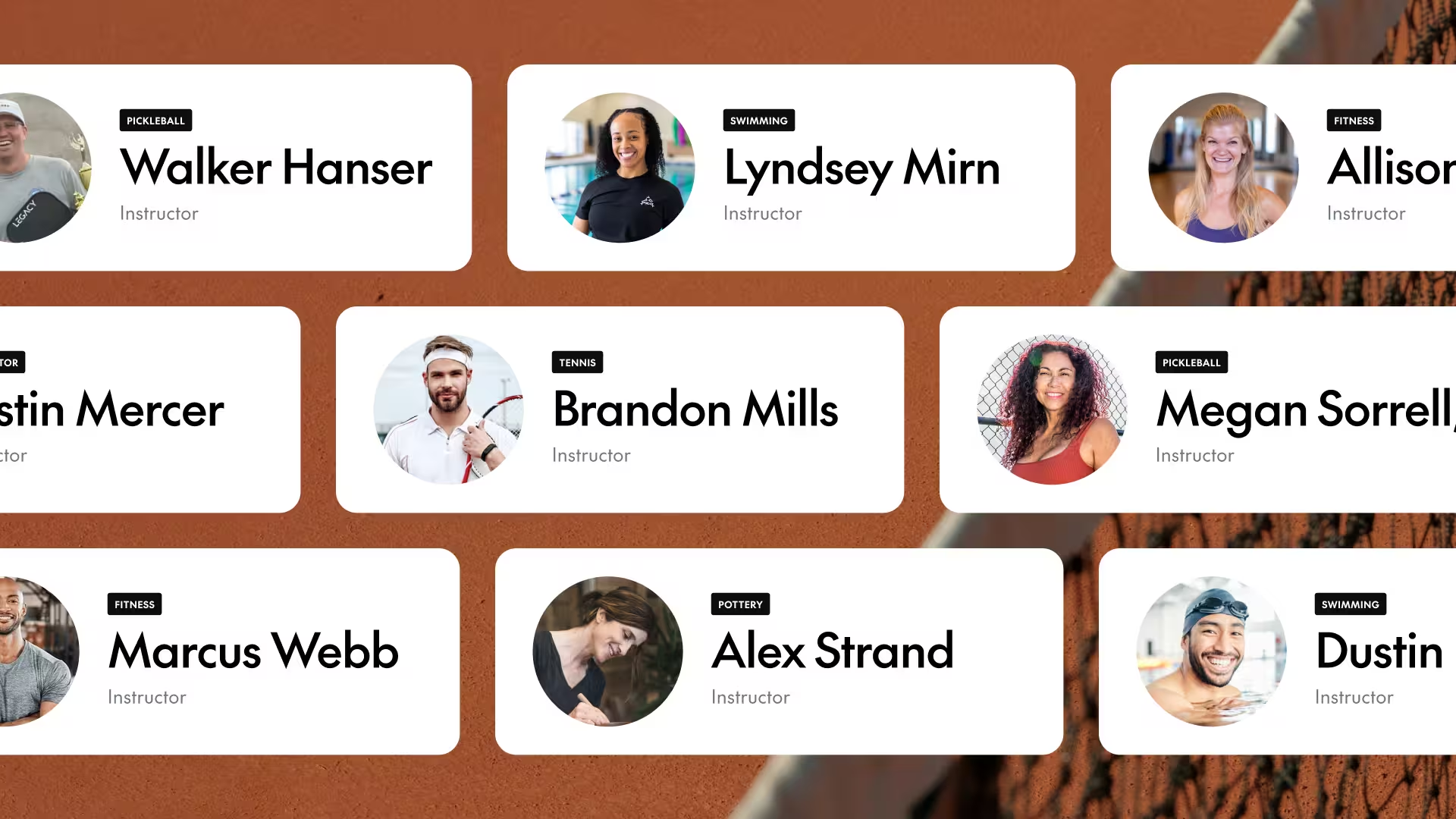
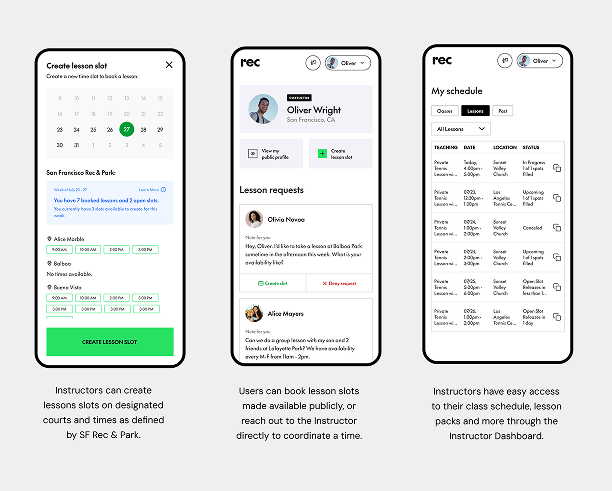
Launched in August 2024, the Rec Instructor Network gave SF Rec & Parks a way to activate all those underused courts without hiring more staff or building new facilities. Certified local instructors could reserve courts at 28 neighborhood park locations, set their own schedules, and start offering lessons, all within guidelines the city put in place.It works well for everyone involved:
- Instructors get access to city facilities and a built-in audience of residents, without the overhead of running their own studio
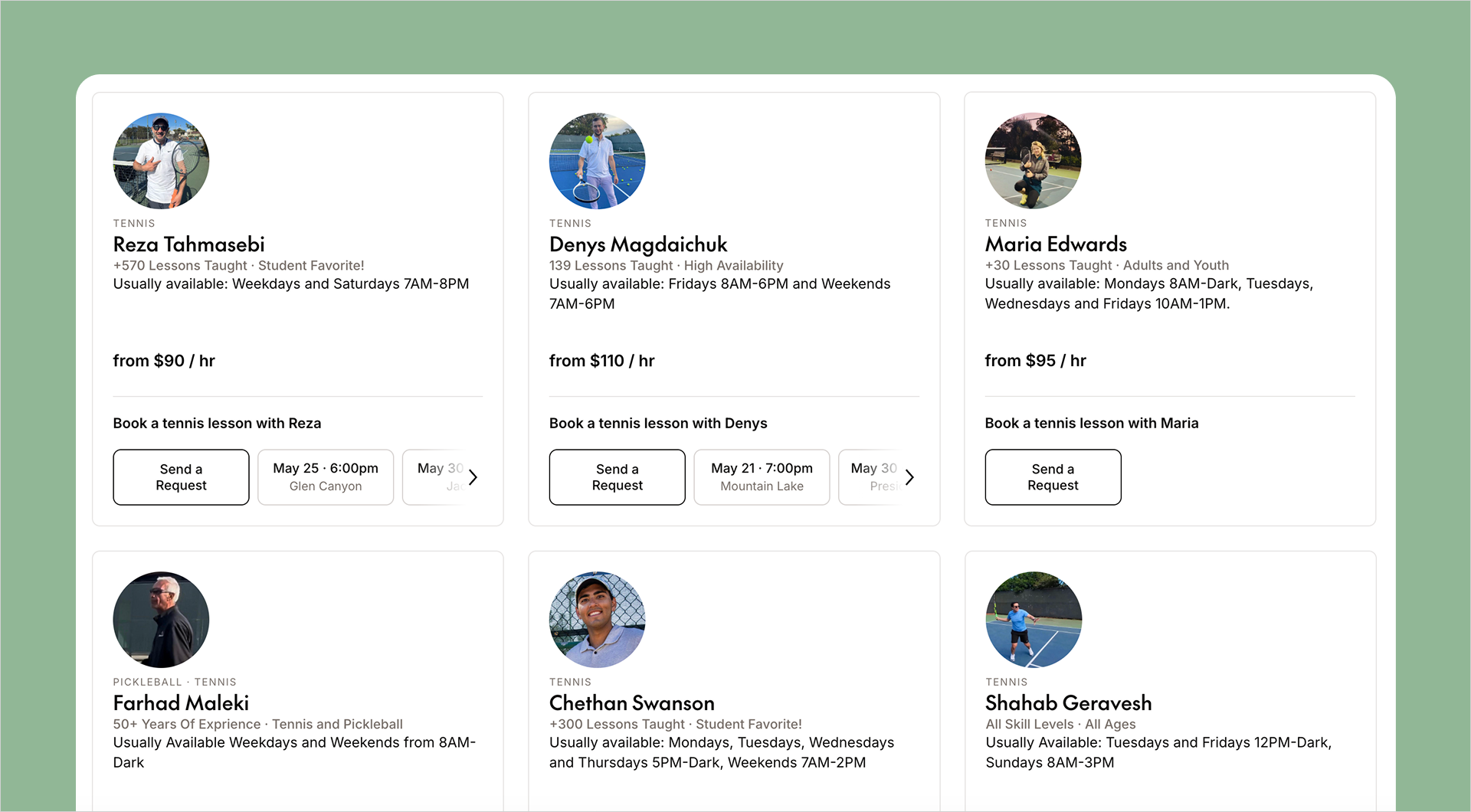
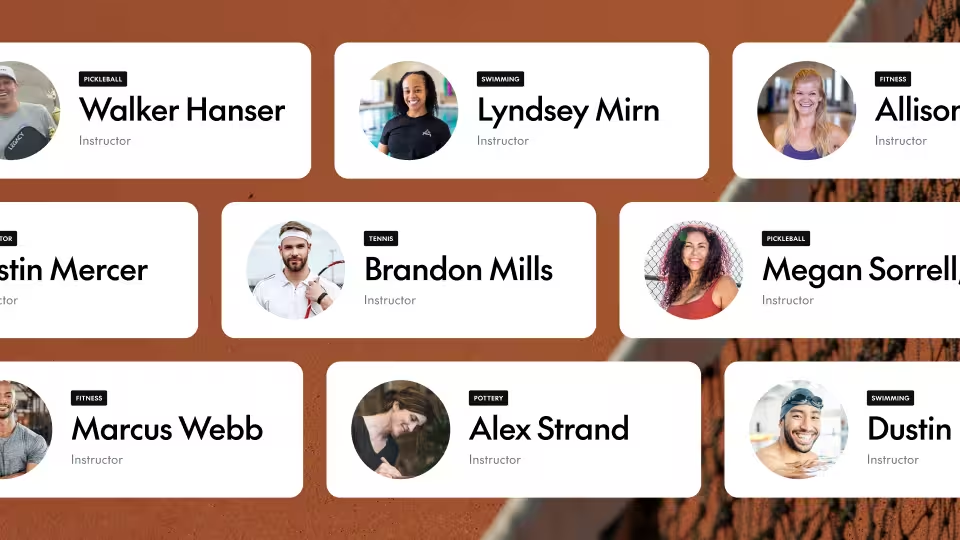
- Residents get more instructors to choose from, more locations near home, and flexible scheduling at a range of price points
- The city collects fees, issues contractor tax forms, and earns revenue from spaces they already own. It all runs automatically through the platform
Rec also handles instructor background checks, payment processing, and contractor payouts, so city staff don’t have to think about any of these logistics.
Balancing Instructor Access and Public Courts
One thing the city cared a lot about was making sure that adding structured lessons didn’t squeeze out regular residents just trying to get a court. Rec’s utilization data gave them the visibility to schedule instructional time thoughtfully, keeping courts open for recreational players when demand is highest.Approved instructors also get a priority booking window, so they can reserve courts a few days before the public can. It gives instructors the predictability they need to actually build a teaching schedule.
More Affordable, More Accessible Instruction
Before the Instructor Network, the city’s instructional offerings were pretty limited: mostly group lessons at one flagship location. Opening things up to independent instructors across the city created something closer to a real marketplace, with a much wider range of teaching styles, price points, and scheduling options. Instructors can offer lesson packs and small group sessions for adults and kids, which makes getting started a lot more approachable for residents who might not want to commit to 1:1 hourly rates.The experience is also designed to make finding the right fit as simple as possible. Availability filtering lets residents search by time or location, so they spend less time clicking through unavailable slots and more time on the court while automated reminders help reduce no-shows and keep courts open for residents who want to use them.
Modernizing Court Reservations for the Public
At the same time, SF Rec & Parks used the Rec platform to overhaul the public court reservation experience. The old system had real problems, and residents knew it.Some of the improvements that made the biggest difference:
- Mobile verification to cut down on bots, so courts and reservations actually go to real residents instead of getting swept up by automated scripts.
- Availability filtering, so residents can search for lessons by time or location and find something that actually works for them without clicking through pages of unavailable slots.
- Automated reminders that help cut down on no-shows and keep courts available for people who actually want to use them.
Growth That Speaks for Itself
Programming Hours: A 5x Leap in One Year
- 2024 (Q3 and Q4 only, partial year): 853 hours of programming
- 2025 (full year): 4,309 hours, a 5x increase
- 2026 (Q1 YTD): 1,313 hours, already on pace to exceed 2025
Revenue: Built From Scratch
The Instructor Network unlocked so much growth opportunity by bringing in over $35k/month in new revenue for the city.
Instructors and Residents
About 50 instructors have been activated on the platform since launch. On the resident side, over 1,367 people have taken a lesson through the network, many of them accessing pickleball and tennis instruction that just wasn’t an option for them before.
What’s Next: Ratings, Reviews, and a Stronger Community
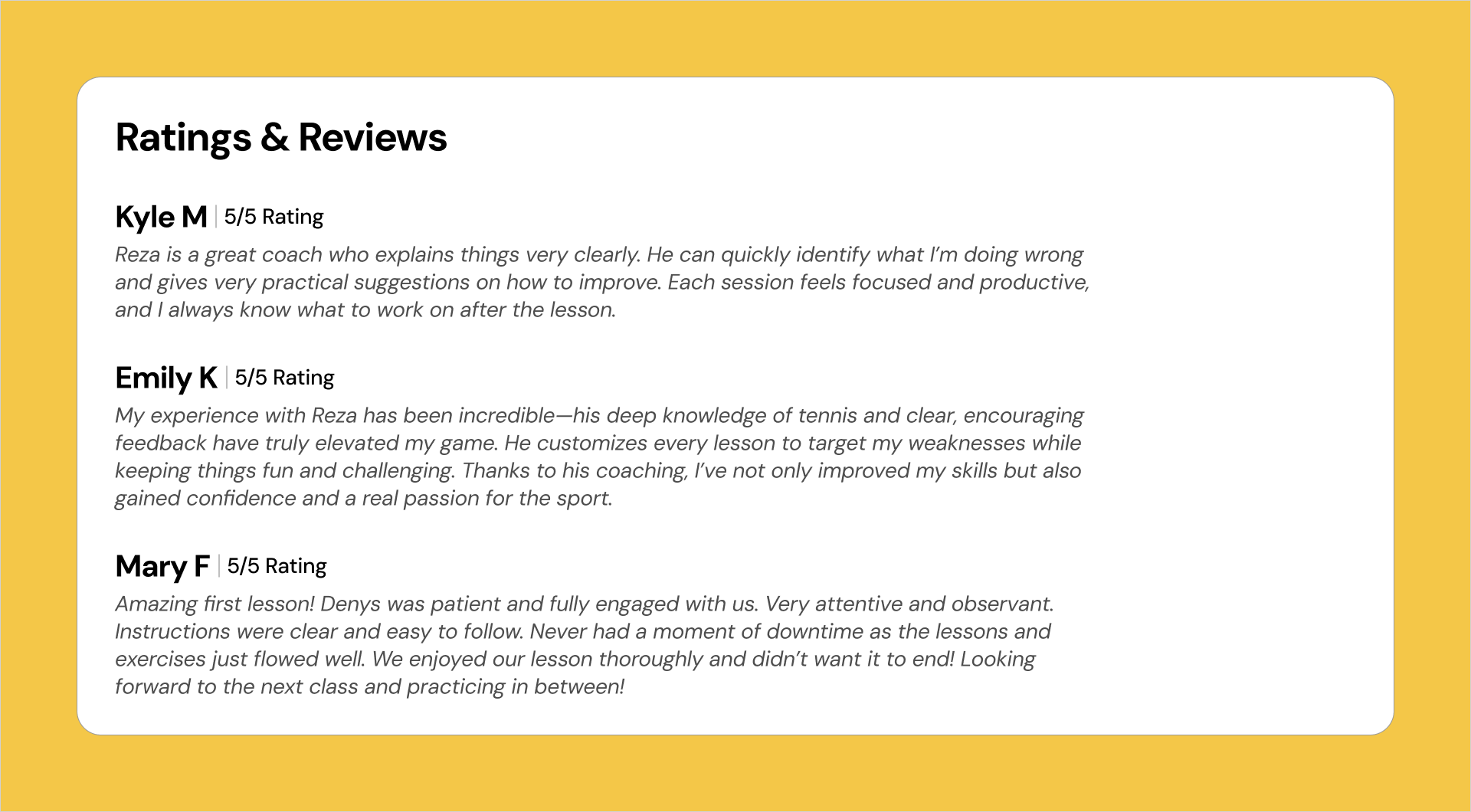
Rec has kept building since the initial launch. One of the newer additions is Ratings and Reviews, which lets residents leave feedback on their experience and helps instructors build a reputation on the platform over time. It creates a nice feedback loop: good instructors get recognized, residents can make more informed choices, and the quality of the overall program goes up.
The Instructor Network proved the model works. Now the question is what to unlock next.
Ready to activate your courts and your community?
👉 Get in touch to learn more about bringing Rec to your community.

.jpeg)