.avif)
Communities across California, including San Francisco, Lincoln, Rocklin, and Santa Cruz, are working to build more equitable court systems. Explore the approach and the lessons parks departments everywhere can take from it.
The Urban Parks Problem
Post-COVID demand for outdoor recreation didn’t just spike, it reset. Tennis and pickleball participation surged, and nowhere felt that pressure more acutely than dense urban park systems already stretched thin. As an example, SF Rec & Parks manages 150+ tennis and pickleball courts across 66 locations. The core complaint wasn’t a lack of courts. It was the inability to reliably find one when you wanted to play.
When Courts Show Booked but Play Empty
An example many partners face is there is a deep problem with their reservation system: no consequences for people booking and not showing up. The most popular courts are perpetually “reserved” and often empty. Residents looking for a court see no availability but the courts sit unused. This isn’t just an operational frustration, it is an equity problem.
The Right Answer Is a System Built for Your Community
Different neighborhoods have different needs. A one-size-fits-all reservation policy, whether universally free or universally paid, misses the complexity of how real communities use parks.
However, there is a commitment problem inherent in free reservation systems. With no financial stake in a booking, residents reserve courts speculatively, hold slots they might not use, and face no friction when plans change. The pattern is well understood in other sectors: airlines and restaurants introduced non-refundable fares and reservations precisely because free holds produced chronic no-shows. Parks departments have been slower to apply the same logic, in part because free access feels like an equity imperative.
What parks departments need is a platform flexible enough to serve every corner of their city.
That’s why Rec keeps your options dynamic:
- Preserve walk-up access at the locations where it matters most. Not every court needs a paid reservation system, and maintaining free, first-come access at select locations isn’t a compromise, it’s a deliberate equity strategy.
- Apply reservation fees selectively, only where demand and no-show rates justify it. A fee at high-demand facilities creates accountability without touching the majority of courts.
- Make it easy for residents to understand how courts work in their community. Clear signage, transparent policy communication, and a simple booking experience reduce friction and build trust.
- Run special pricing programs for youth, seniors, or community groups. Means-tested waivers and subsidized access ensure that accountability tools don’t become access barriers for the residents who need courts most.
Making Park Reservations Work for Everyone
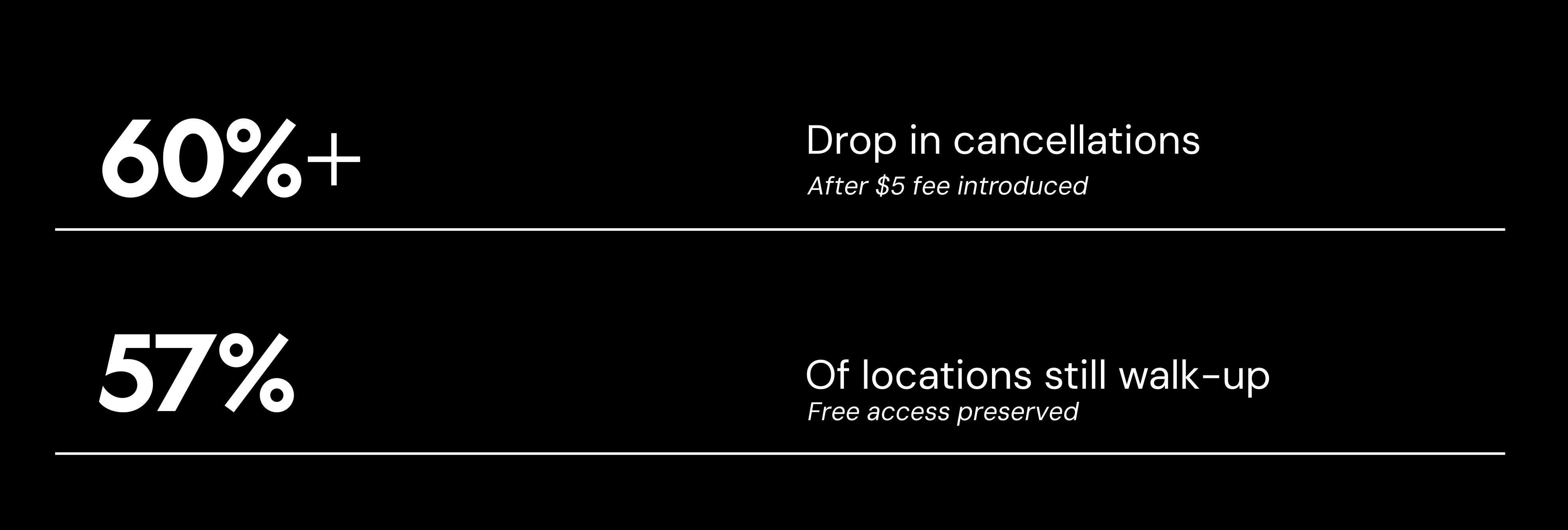
There is the ability to put this flexibility to work across a communities’ courts. For instance, in San Francisco, they preserved walk-up access at 57% of locations citywide, keeping free, first-come play as the norm for most of the system.
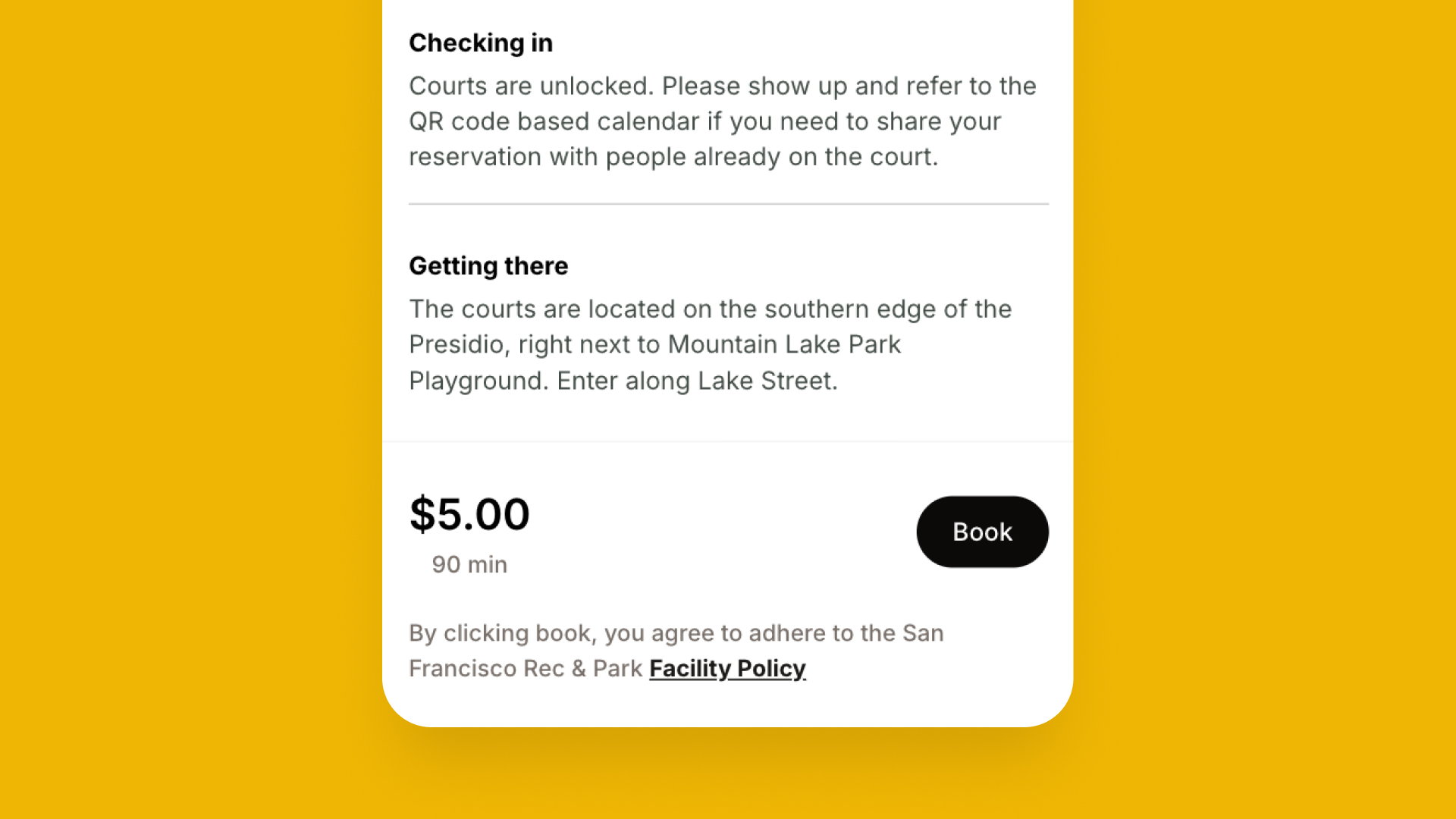
At the 28 highest-demand facilities, where no-show complaints were concentrated, they introduced a $5/hour reservation fee, applied selectively rather than system-wide.
To help residents understand what to expect at each location, the department invested in clear court signage and transparent policy communication, making the mix of walk-up and reservable courts easy to navigate.
Underpinning all of it: real-time utilization data that showed the department exactly where accountability tools were needed, and where to leave things alone.
A $5 Fee and What It Actually Does
The fee wasn’t designed primarily to generate revenue, though it’s projected to bring in over $30,000 per month for a department facing real budgetary pressure. It was designed to create accountability. At $5, it’s intentionally nominal compared to what residents pay elsewhere:
.png)
The Results: Cancellations Down, Courts Filled with Real Play
The results were clear. After the new strategy launched, cancellation rates fell sharply, dropping over 60%. That is the number that matters most. Cancellations in a free system represent courts that looked unavailable but were sitting empty.
The most tangible proof is Dolores Park in San Francisco, previously booked seven days out of every week without exception, its courts became reservable mid-week. The courts weren’t less popular. They were just actually being used.
Total booking volume dipped, which was expected. Speculative holds and multi-account hoarders left the system. What remained were residents who actually intended to play.
.jpeg)
What “Healthy” Looks Like: Benchmarks for Parks Directors
.png)
Are Paid Fees Bad for the Community?
It's a fair question, and the concern is understandable. Charging for access to public courts can feel like it contradicts the mission of public parks. But when implemented thoughtfully, paid reservations can actually expand equity across the whole community.
Options are good for everyone. Residents with predictable schedules like commuters and office workers benefit from being able to book a guaranteed court in advance. Meanwhile, free courts remain available for those with more flexible, spontaneous schedules who can simply show up when it suits them.
The data reinforces this: cancellation rates drop significantly with paid reservations, meaning courts that appeared fully booked are now genuinely in use, and overall utilization on high-demand courts goes up.
And paid doesn't have to mean unaffordable. Our platform gives departments the flexibility to offer scholarships, group discounts, and tiered pricing so communities with socioeconomic concerns can maintain low-cost access where it matters most.
The Right System Makes Every Court Count
The path to equitable courts isn’t a single policy decision, it’s having the tools to make the right decision for each location, each community, and each moment. Rec gives parks departments exactly that flexibility.
Ready to bring flexible, equitable court reservations to your community?
Rec’s facilities platform is purpose-built for the policy flexibility, equity considerations, and reporting requirements of municipal parks departments.