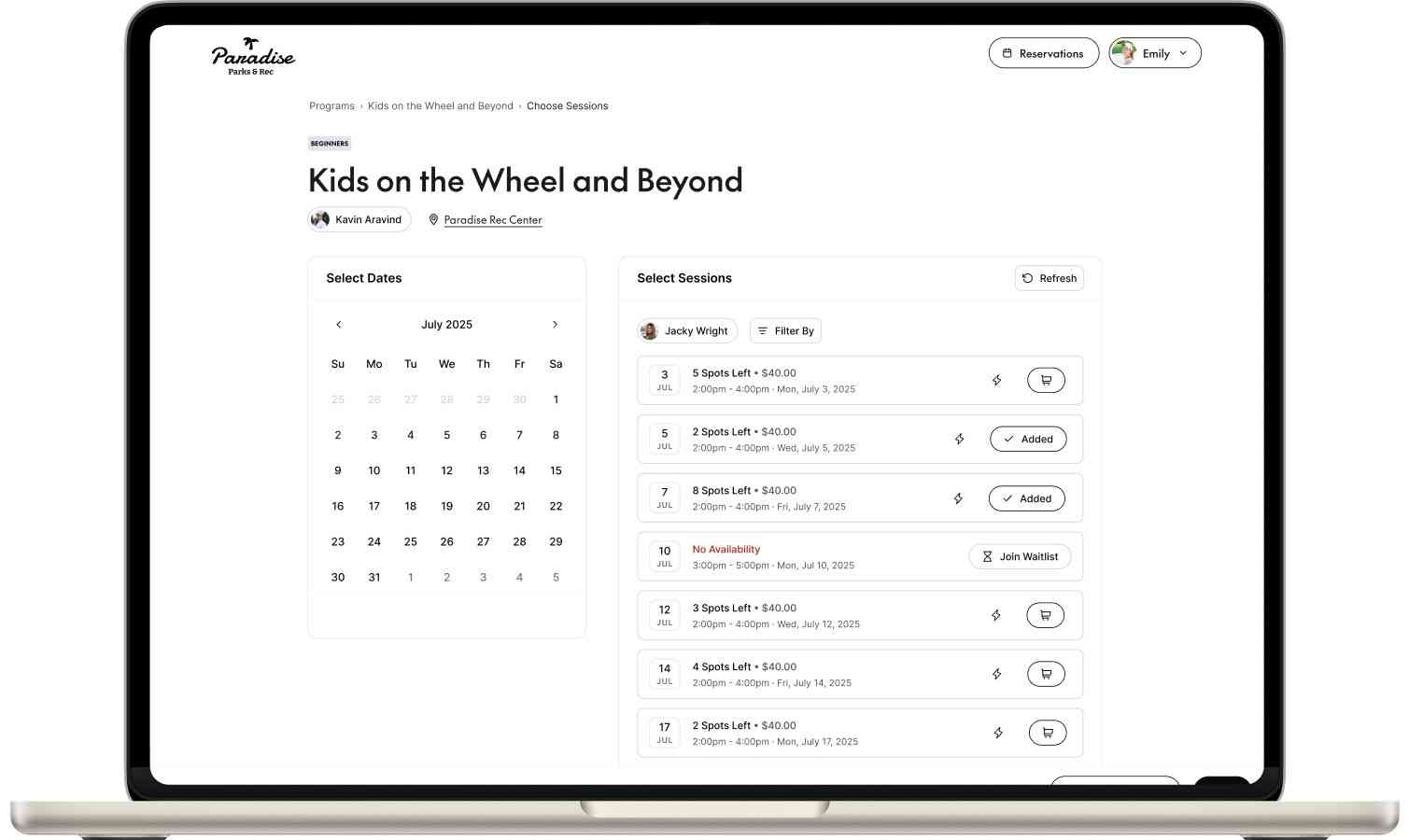
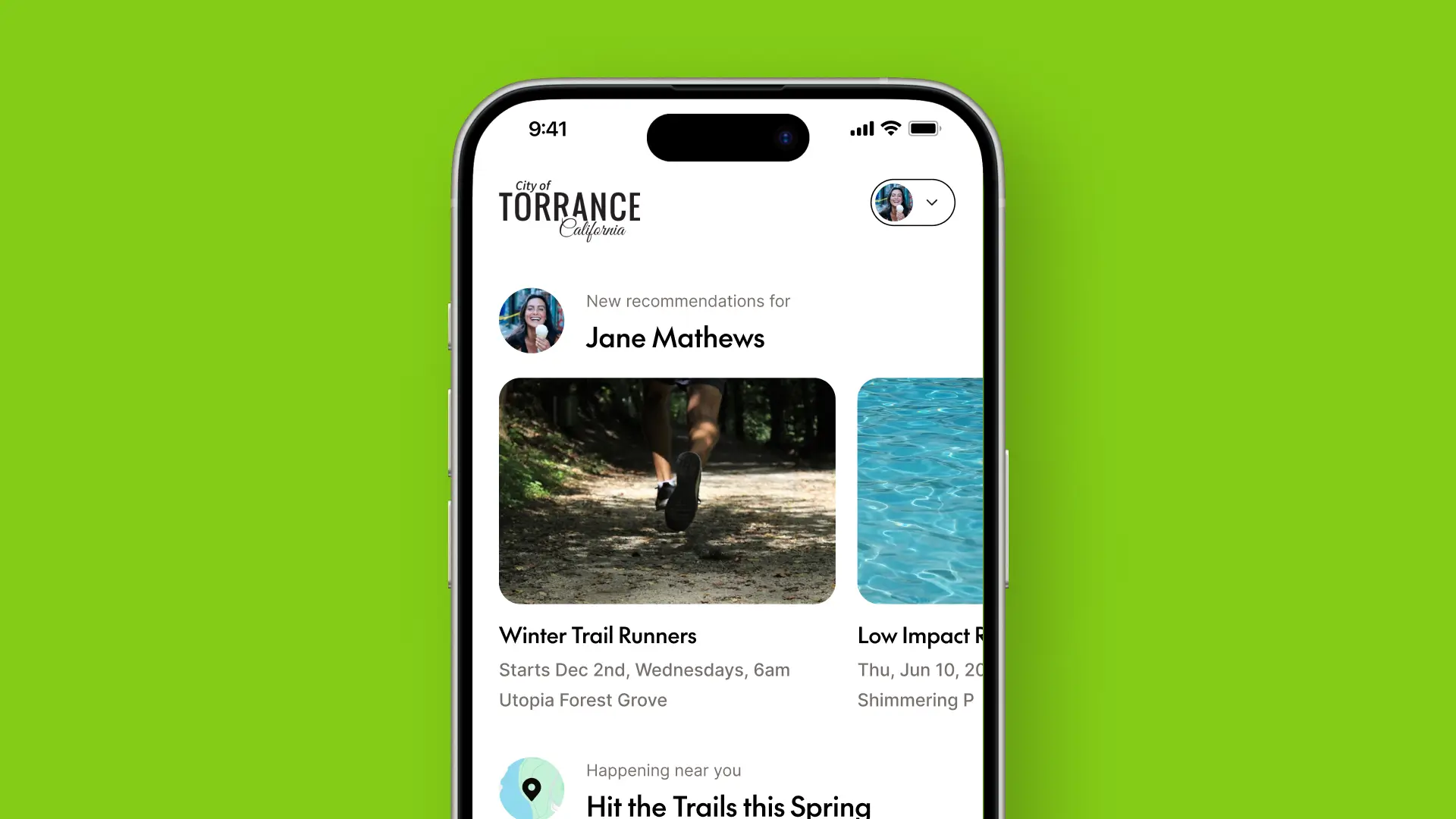
If a resident can’t reserve a pickleball court without a mouse, they don’t get to play. If a parent using a screen reader can’t complete summer camp registration, their kid loses the spot. That’s not a “website issue.” That’s inequitable access.
At Rec, accessibility is a core product requirement. Our platform is reviewed against WCAG (Web Content Accessibility Guidelines), with a target conformance level of WCAG 2.2 AA.
.png)
What is WCAG?
WCAG is an international standard that defines what it means for digital experiences to be accessible to people with disabilities (and, honestly, easier for everyone).
WCAG is organized around four principles (you’ll see these everywhere): Perceivable, Operable, Understandable, Robust.
It also comes in conformance levels: A, AA, and AAA, with AA being the most common target for public-facing services.
And the standard keeps evolving. WCAG 2.2 is now a W3C Recommendation and adds new requirements that map well to real-world flows like registration, account access, and checkout.
Why accessibility matters (parks & rec edition)
Parks & rec is where community life happens. And the digital experience is often the front door.
Here are a few “small” barriers that turn into big ones:
- A resident trying to reserve a picnic pavilion with a keyboard only gets stuck in a date picker.
- A parent using VoiceOver can’t tell which fields are required during registration.
- Someone with low vision increases text size and now the “Continue” button is off-screen.
- A user with a cognitive disability hits a login flow that requires a puzzle / memory challenge.
Accessibility isn’t about checking a box. It’s about making sure people can actually participate without needing help, workarounds, or extra time.
What the law is (and what it changed recently)
Starting in April 2026, many state and local government entities will need their websites and mobile apps to meet specific accessibility requirements under ADA Title II. The Department of Justice’s final rule adopts WCAG 2.1 Level AA as the technical standard for public web and mobile app content, with compliance deadlines that begin in 2026 (and later deadlines for smaller entities and certain special districts).
Rec targets WCAG 2.2 Level AA, which is newer and includes additional success criteria that make core flows like registration, login, and checkout even more accessible.
This is general information, not legal advice.

What we aim for at Rec (and why to trust us)
Accessibility isn’t something we “circle back to” after launch. We build with it from the beginning, check it as we go, and keep improving it with every release.
Rec is built by a team that’s designed and shipped products at Google, Uber, Amazon —places where software has to work for huge, diverse audiences and where “edge cases” are just real people trying to get something done. That experience shapes how we operate: clear standards and constant testing and improvement.
Because accessibility is hard to retrofit, we built program registration and facility reservations with it in mind from day one. And we design every new flow the same way.
Quick gut-check: how accessible is your current system?
Not gonna name any names, but not all parks & rec software is accessible out of the box. The gaps usually show up in the exact moments residents rely on most.
- Keyboard-only pass: try the full journey without a mouse. If you can’t tab through and finish, a resident can’t either.
- Automated scan: run an Axe/Lighthouse check to catch the obvious stuff
- Screen reader spot check: do one run with VoiceOver or NVDA and see if forms, errors, and buttons make sense out loud.
- Zoom/mobile test: zoom to 200% and try on a phone. If buttons vanish or layouts break, people get stuck.
Accessibility is what turns “available” into “actually usable” for the whole community. If you want to level up how residents access programs, reservations, and services, get in touch. We’d love to talk about how Rec can help make your parks system more accessible.
FAQS
Q: What WCAG level do parks & recreation websites need to meet?
A: Starting in 2026 under ADA Title II, many public entities must meet WCAG 2.1 AA, though WCAG 2.2 AA is now best practice.
Q: How can I test whether my parks & recreation website is accessible?
A: Try keyboard-only navigation, run an Axe or Lighthouse scan, test with a screen reader, and zoom to 200%—all steps in our accessibility checklist.
Q: Why is WCAG 2.2 important for recreation registration systems?
A: WCAG 2.2 includes new requirements that improve mobile forms, authentication flows, and interactive components—critical parts of resident registration and reservation experiences.
.avif)